Your recordings with multiple mics sound thin and hollow. You've tried repositioning them, but the weird, unnatural audio persists. The 3-to-1 rule1 is the simple guideline that can fix this.
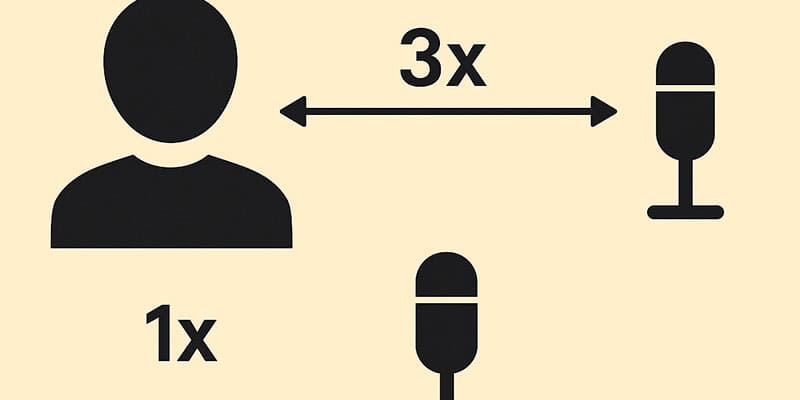
The 3-to-1 rule is a principle for placing multiple microphones to avoid phase cancellation2. It states that the distance between two microphones should be at least three times the distance from the first microphone to the sound source3. This preserves audio clarity4 and prevents a thin sound.
This rule might seem a bit technical at first glance, but it's one of the most practical tools I use to get clean audio. Once you understand the "why" behind it, you'll never set up two microphones the same way again. Let's break down exactly what's happening with the sound and how you can use this rule to your advantage, whether you're in a studio or singing karaoke at home.
Why does phase cancellation2 happen with microphones?
You set up two mics, but the final recording sounds weak and lacks bass. It's frustrating when the audio doesn't capture the full sound you hear. This is likely caused by phase cancellation.
Phase cancellation happens when a sound wave is recorded by two mics at slightly different times. These out-of-sync waves can interfere with and cancel each other out. This conflict often removes low frequencies5, which makes the audio sound thin, hollow, and unnatural.

To understand this, think about a sound wave. It has peaks and troughs, like ripples in water. When a sound hits your first microphone, its wave is captured. That same sound has to travel a little farther to reach the second microphone, so it arrives a millisecond later. The wave captured by the second mic is now slightly behind the first one. They are "out of phase." If the peak of one wave lines up with the trough of another, they cancel each other out. This is called destructive interference6. I've seen it happen countless times, especially when miking a drum kit or a choir. The low-end punch just disappears. This table helps visualize the problem:
| Mic Placement Problem | How Sound Waves Interact | The Unwanted Result |
|---|---|---|
| Mics Too Close | Waves arrive at slightly different times, causing peak-and-trough overlaps. | "Comb filtering" effect, a hollow or "phasey" sound. |
| Bass Frequencies | Long wavelengths are more easily cancelled out by small time delays. | The recording loses its warmth and low-end power. |
| Inconsistent Spacing | Random phase issues appear across the frequency spectrum. | The sound becomes unpredictable and hard to mix. |
This physical problem is exactly what the 3-to-1 rule is designed to prevent.
How do you correctly apply the 3-to-1 rule in practice?
You know the theory, but applying it in a real recording session7 feels confusing. Guessing the distances wastes time and can still lead to a bad take. There's a simple, step-by-step way to apply it.
First, measure the distance from your sound source to your closest microphone. Let's call this distance "X". Next, place your second microphone at least three times that distance (3X) away from the first microphone. This creates enough separation between the signals to avoid issues.

I remember the first time I applied this correctly. I was recording an acoustic guitar8 and wanted to capture both the body's warmth and the fretboard's brightness. I placed the first mic about 8 inches from the soundhole. That meant my "X" was 8 inches. According to the rule, my second microphone needed to be at least 3 times 8 inches, or 24 inches (2 feet), away from the first one. I aimed the second mic at the 12th fret and measured the distance. The difference was amazing. The two signals blended perfectly in the mix without any of that hollow sound I used to struggle with. The sound from the second mic was different enough in time and volume that my audio software treated it as a separate, clean signal instead of a conflicting one. Here is a simple reference guide:
| If Mic 1 to Source is (X)... | Then Mic 2 to Mic 1 Must Be (at least)... |
|---|---|
| 6 inches | 18 inches |
| 1 foot | 3 feet |
| 1.5 feet | 4.5 feet |
| 2 feet | 6 feet |
Remember, this is a strong guideline, not a law. But you have to know the rule before you can break it effectively.
Does the 3-to-1 rule apply to karaoke machines9?
You got a karaoke machine with two mics, but duets sound muddy and strange. It ruins the party when the audio quality turns a fun performance into a noisy mess. That professional rule can fix your karaoke night.
Yes, the 3-to-1 rule is very important for karaoke. When two people sing, each microphone picks up both voices. Following the rule keeps the microphones far enough apart to prevent voices from sounding thin or causing feedback10, ensuring a clear and enjoyable duet.

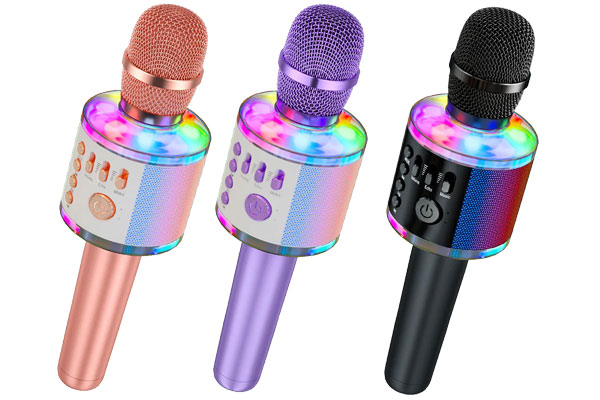
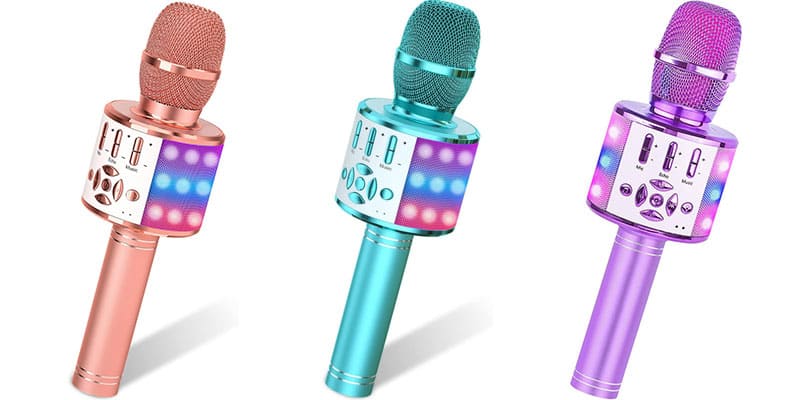
As a manufacturer, we see this issue a lot with our kids' karaoke machines. Two kids get excited, stand shoulder-to-shoulder, and sing into their mics. The sound becomes a problem. Think about it: Singer A is the main sound source for Mic A. But Singer B, standing right next to them, is a secondary sound source for Mic A. The same is true for Singer B and Mic B. If they are too close, phase cancellation will make their voices sound weak. To fix this, if Singer A is holding their mic 6 inches from their mouth, Singer B should be at least 18 inches away. This simple spacing makes a huge difference. Another key tip for karaoke is the distance to the speaker. A microphone should never point at the speaker, and singers should stand behind the speaker if possible. This prevents feedback, which is that awful squealing sound. Both rules are about proper microphone placement11 to ensure the only thing you hear is happy singing.
Conclusion
The 3-to-1 rule is a simple guideline that prevents phase cancellation. It ensures your multi-mic recordings, and even your karaoke duets, sound clean, clear, and professional every single time.
Understanding the 3-to-1 rule can significantly improve your audio quality, making your recordings sound professional. ↩
Learn about phase cancellation to avoid common audio pitfalls and enhance your recording techniques. ↩
Learn how the sound source impacts your recordings and how to optimize it for better results. ↩
Explore tips and techniques to enhance audio clarity, ensuring your recordings are crisp and clear. ↩
Understanding low frequencies can help you maintain warmth and depth in your audio. ↩
Understanding destructive interference can help you troubleshoot and improve your audio recordings. ↩
Explore essential steps for a successful recording session to achieve the best audio results. ↩
Discover optimal microphone techniques for capturing the rich sound of acoustic guitars. ↩
Find out how proper microphone placement can enhance your karaoke experience and sound quality. ↩
Explore feedback prevention techniques to ensure clear and enjoyable audio experiences. ↩
Discover effective microphone placement strategies to optimize sound quality in your recordings. ↩